
What Is a Casino Withdrawal Lock?
25/04/2025How to Protect Payment Information at Online Casinos
08/05/2025How Bank Transfers Work at Online Casinos
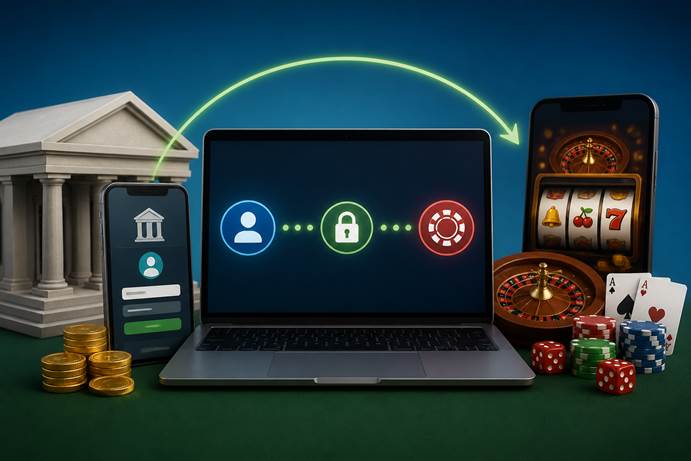
For players who prefer a direct route, a bank transfer is a familiar way to move funds into an online casino. A related example such as mino casino login can help frame this account topic. The process starts when you submit your banking details in the casino’s cashier, and the money travels through the interbank network to the casino’s merchant account. If you want to see the step‑by‑step flow, you can read more about the basics at .
One of the most noticeable weak points in this system is timing. Banks often process transfers in batches, and weekends or public holidays can push a transaction out of the normal window. A transfer sent late on a Friday might not appear in the casino’s balance until the following Monday, leaving a player uncertain about their available funds. A practical safeguard is to check your bank’s processing schedule in advance and plan deposits for weekdays, especially if you’re chasing a promotion that expires on a specific date.
• Security concerns are ever present
• Fees and currency conversion can also surprise players
• While this protects against unauthorized activity, it can also stall legitimate withdrawals
Where Reference Fits In
Another vulnerability lies in the reference number that accompanies each transfer. Casinos use this identifier to match the incoming money with the correct player account. A typo or a missing digit can redirect the funds to a different account or leave them stranded in the interbank system. Players should always double‑check the reference field before confirming the transfer, and keep a screenshot of the confirmation page for later verification.
|
Area |
What to know |
|
Context |
One of the most noticeable weak points in this system is timing. |
|
Consideration |
Another vulnerability lies in the reference number that accompanies each transfer. |
|
Practical takeaway |
Fees and currency conversion can also surprise players. |
Security concerns are ever present. Phishing sites that mimic legitimate casino portals can steal banking credentials, while a compromised computer can expose sensitive data during the transfer process. To mitigate these risks, use a secure, encrypted connection whenever you log into your bank or the casino’s cashier, enable two‑factor authentication on both accounts, and avoid public Wi‑Fi networks when handling financial transactions.
Fees and currency conversion can also surprise players. Many banks charge a fixed fee for each outgoing transfer, and if the casino operates in a different currency, a conversion fee may apply. Comparing the fee structure of your bank with the casino’s payout options can reveal cheaper alternatives, such as using a dedicated debit card linked to the casino’s account or choosing a bank that offers free international transfers.
The Role of Large
Fraud detection systems in banks and casinos can flag large or frequent transfers as suspicious, temporarily freezing the account until verification. While this protects against unauthorized activity, it can also stall legitimate withdrawals. Maintaining a clear record of all deposits and withdrawals, and notifying both your bank and the casino when a large transfer is expected, can speed up the verification process and reduce downtime.
Why Ultimately Matters
Ultimately, understanding the mechanics of bank transfers and recognizing their weak points allows players to take proactive steps. By checking processing times, verifying reference numbers, securing connections, monitoring fees, and keeping detailed records, the transfer process remains a reliable tool rather than a source of frustration.